
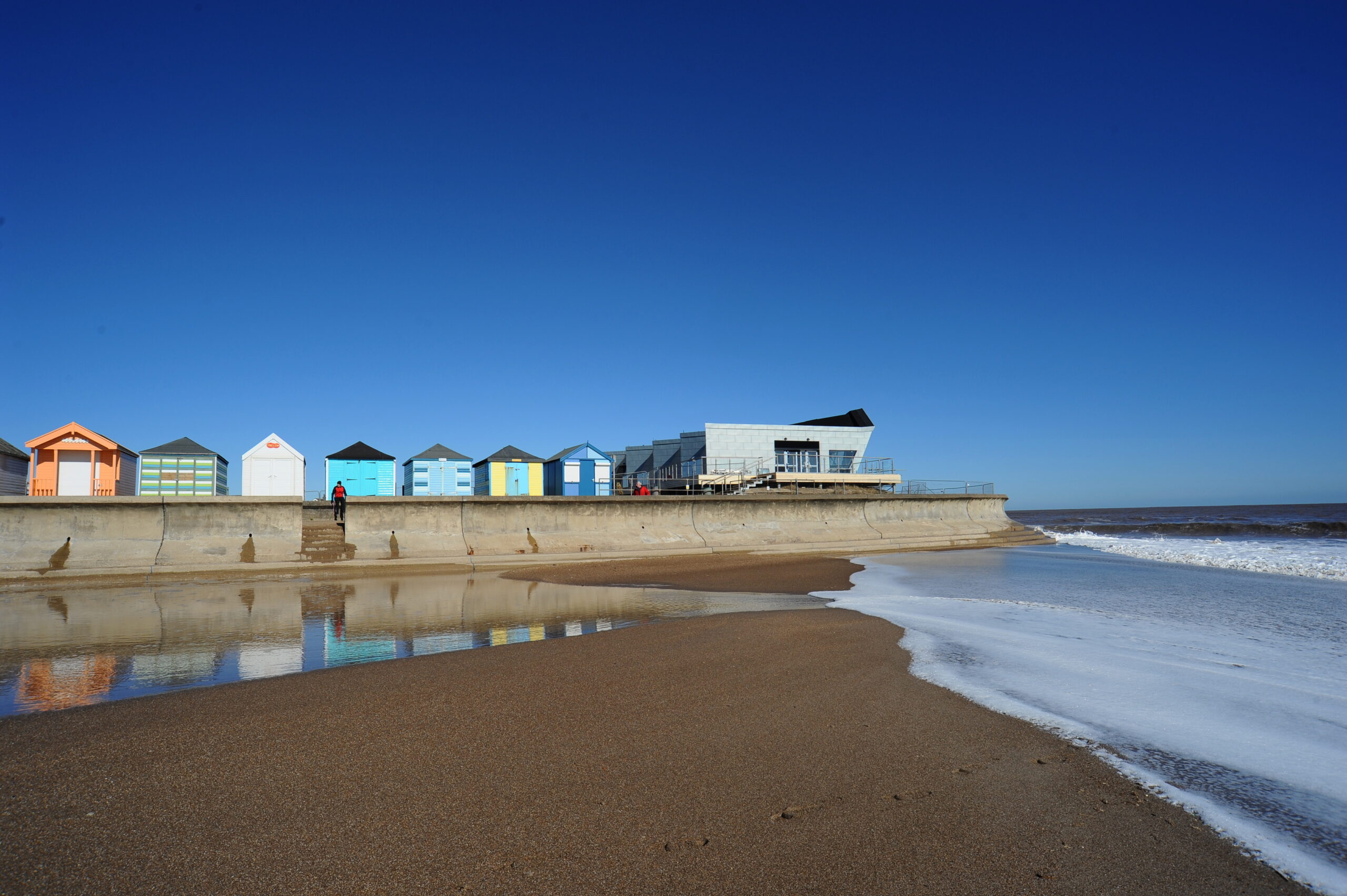
There are five main settlements along the 38 km coastline: Mablethorpe in the north, Sutton-on-Sea, Chapel St Leonards, Ingoldmells, and Skegness in the south. Tourism is the cornerstone of the local economy, attracting millions of visitors and generating hundreds of millions of pounds for local businesses in the area every year.
Sea defences protect lives, livelihoods and the coastal economy, and yet are often taken for granted. The defences are critical to the areas’ safety and economic security and underpin the productivity and economic prosperity of this important region.
Many of the existing sea defences are approaching the end of their serviceable lives and are no longer viable as long-term solutions in their current form. While beach nourishment has extended the serviceable life of the sea defences, this isn’t a long-term solution.
As time passes, these structures become less reliable, and replacement like-for-like will not be feasible or effective with rising sea levels. Major investment and new approaches are required to provide dependable and sustainable flood protection for the future.
The current flood risk management approach of beach renourishment has been in place since 1994, helping to successfully reduce the risk of flooding to 20,000 homes and businesses, 24,500 static caravans and 35,000 hectares of land.
Around £360 million has already been invested, with a further £320 million required for beach renourishment and asset maintenance over the next 12 years.
Whilst the beach nourishment programme is currently funded by central government, funding is never guaranteed, especially for sparsely populated areas like the Lincolnshire coast. With investment for the short-to-medium term reliant on a long-term strategy, there is a real urgency to define what happens next.